Most hosting support is built around infrastructure, which is only part of the picture. A business website also depends on its code, plugins, theme and database, and on how all of those pieces interact.
When a developer runs the hosting, support changes. Keeping the server online is still part of the job, but so is understanding how the website works and what it needs to stay fast and reliable.
The problem is not always the server
A slow website might be caused by poor caching, a bloated plugin, render-blocking scripts or an external service. If support only looks at the hosting account, the real problem may never get solved.
A developer looks at the whole stack, which makes troubleshooting more practical and more honest. Instead of blaming the host or the customer by default, they can find where the bottleneck is.
Better decisions happen earlier
Developers know the tradeoffs. Adding one plugin can slow a site down, an update can introduce a conflict, and a small technical detail can affect the whole experience. Knowing that helps prevent problems rather than only reacting to them.
It also helps when you want to improve the website over time. Adding a plugin, cleaning up a page builder layout, adjusting caching or keeping a heavy third-party script are all technical decisions with business consequences.
Support becomes more useful
There's a difference between “the server is online” and “your website is working well,” and businesses care about the second one. A developer can close that gap because they understand how the website works.
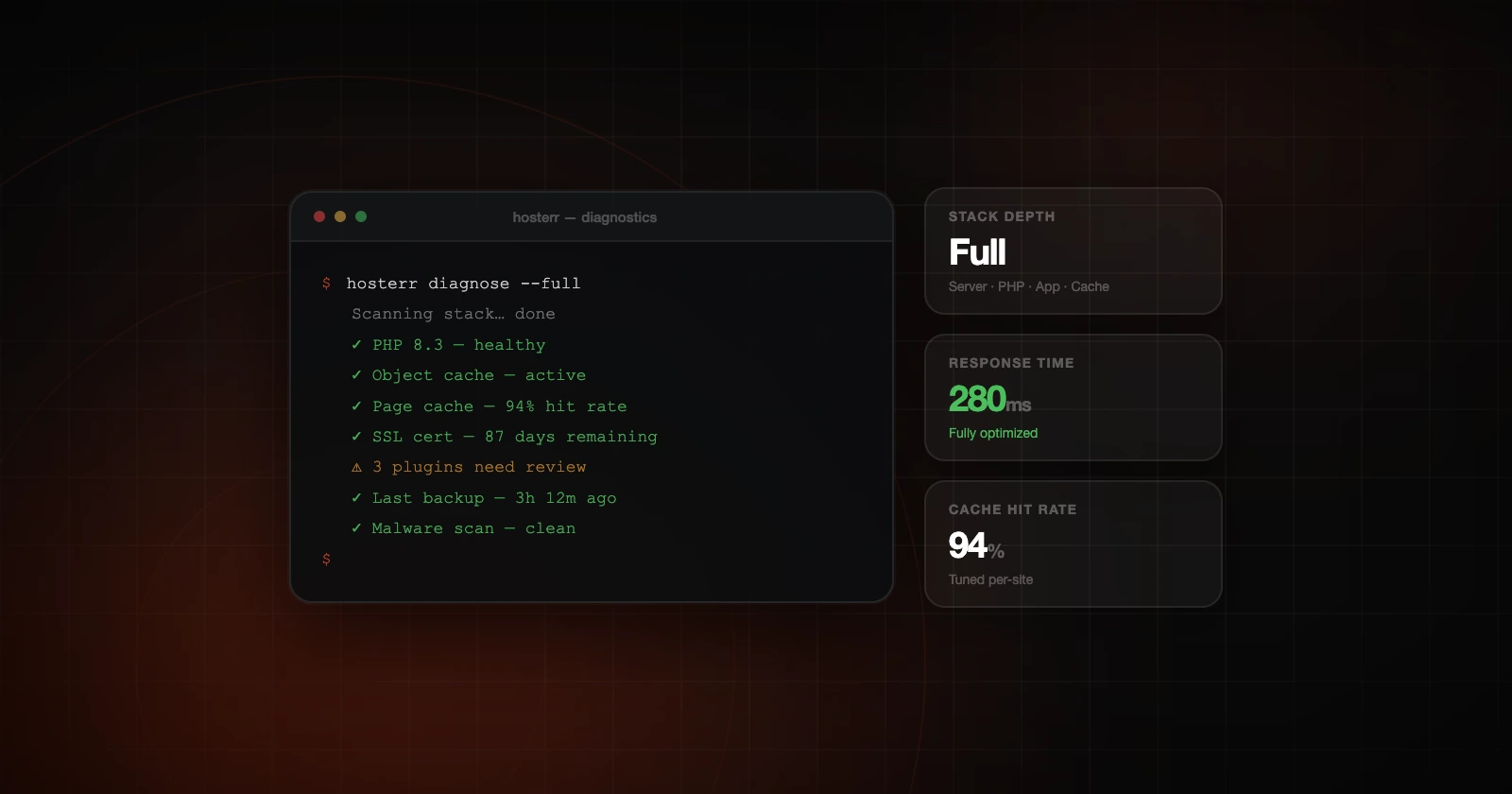
When something breaks, context makes for better support. A developer can look at error logs, plugin behavior, network requests and hosting configuration together, which is far more useful than a reply confirming the server is running.
Performance gets treated thoughtfully
Speed depends on more than a hosting setting. Development, content, configuration and monitoring all play a part, and a developer can make better choices because they understand how each layer affects the result.
If your website feels slow despite “good hosting,” the problem may be in the site itself. We go into this in why your website feels slow even when hosting looks fine.
Developer-led hosting is especially useful for growing sites
As a site grows, it gets more complex. More pages, plugins, forms and marketing scripts, and more of the business relying on it, all raise the stakes. A generic provider may still treat it like a simple account, while a developer sees that the website has become part of how the business runs.
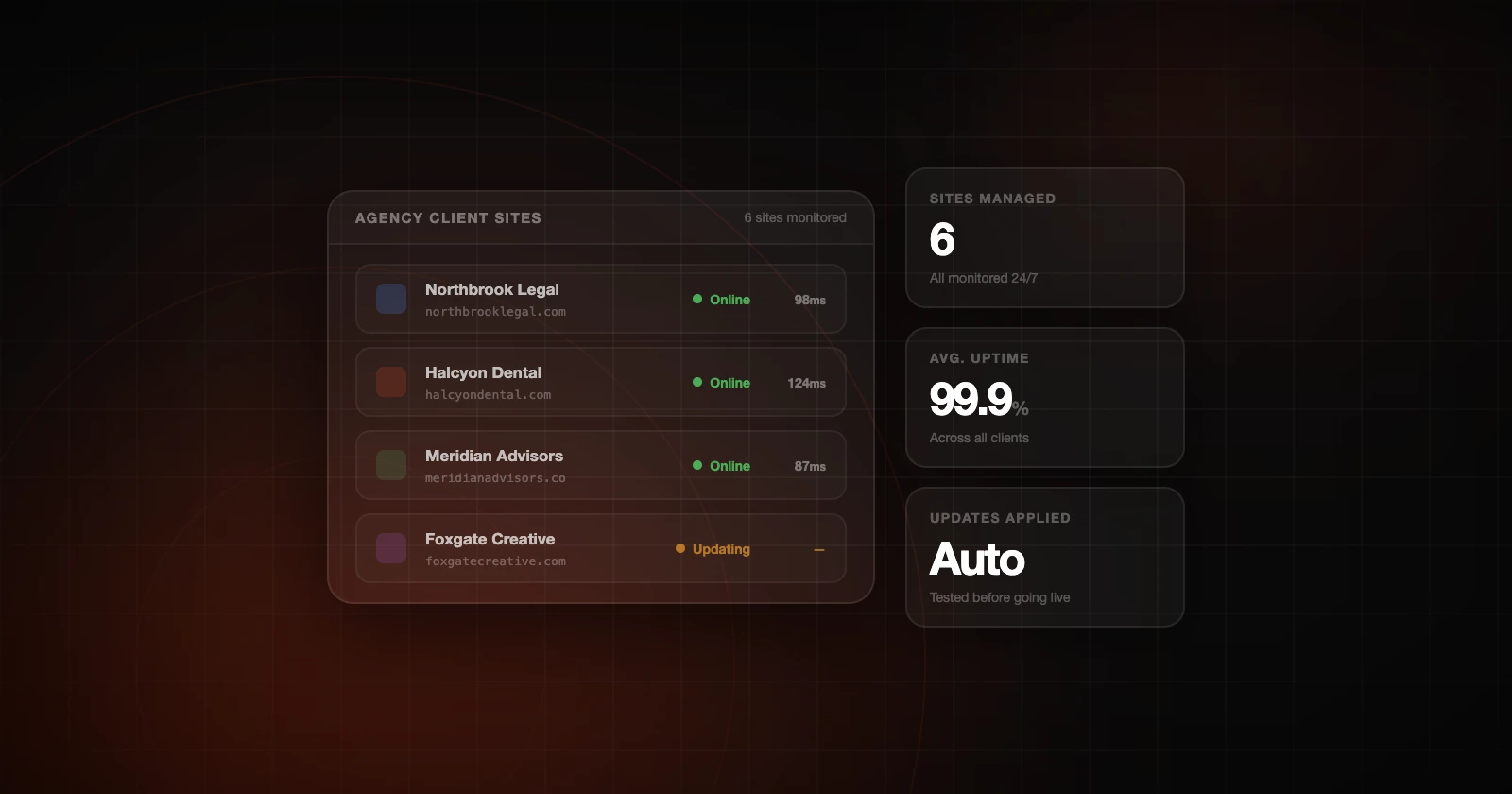
This is useful for agencies too. After launch, client sites need somewhere stable to live, and developer-led hosting helps protect the quality of that work and cuts down on support back-and-forth. See managed hosting for agencies for more on that.
The Hosterr difference
Hosterr is run by a developer. To us, hosting means keeping the whole site working, from the server up through the plugins and forms.
If you'd like a developer looking after your site, connect with Hosterr.
Developer-led hosting improves communication
Technical support also means explaining what happened in a way the business can understand. A developer can turn technical issues into practical decisions: what's urgent, what can wait, what creates risk, and what would improve the site most.
That helps most when several people are involved, such as the business owner, a marketing team, an agency or outside vendors. With clear technical context, nobody has to guess.
Developer judgment helps avoid plugin overload
Many websites pile up plugins because each one solves a small problem quickly. Over time, the site gets heavier, slower and riskier. A developer can help you decide whether a plugin is needed, whether there's a lighter option, or whether the feature should be built differently.
Plugins are fine when each one has a clear reason to be there.
It also helps with migrations
Moving a business website from generic hosting to managed hosting needs care. DNS, SSL, redirects and email settings all need attention, and a developer understands how those pieces fit together.
A sloppy migration can cause downtime, broken forms, missing files or SEO problems. A careful one keeps the site working while moving it onto a better foundation.
The difference is ownership
Developer-led hosting means the provider cares whether the site actually works well, not merely whether the hosting account is active. That sense of ownership is what many businesses are missing when they feel stuck with generic hosting.
Frequently asked questions
Is managed hosting only for large businesses?
No. It's often most useful for smaller businesses that don't have technical staff. If your website brings in leads or sales, or the business relies on it day to day, it's worth hosting properly whatever the size of the company.
How is Hosterr different from standard hosting?
Standard hosting usually gives you space to run a website. Hosterr manages the site as well: maintenance, performance, security and backups, with technical support straight from a developer.
Can managed hosting improve SEO?
Managed hosting doesn't replace content or SEO work, but it supports the technical side that SEO depends on. Faster pages, fewer errors and better uptime can all help your search rankings over time.